You must have regular cleaning scheduled according to risk factors, food processing capacity, allergen concerns, and regulatory checks, plus documented records supporting food safety protocols, inspection results, and government health requirements. The following sections describe essential sanitation program components.
Important Highlights
- Food safety cleaning specialists in Brampton serve restaurants, grocery departments, commissaries, warehouses, bakeries, schools, mobile vendors, and allergen-sensitive operations.
- Compartmentalized approaches clean high-touch surfaces, food-contact equipment, kitchens, floors, drains, restrooms, and storage areas for eliminating cross-contamination.
- Recording of conclusion through swabs, reviews, and remedial documentation confirms trained contractors have checked approved sanitizer dilution, suitability, and contact time.
- Threat, throughput, changeovers, spills, and standards need to guide sanitation schedules, with routine, weekly, and cyclical operations designated by area.
- Liability, color-coded instruments, HACCP, public-health knowledge, safety training preparation, references, and compliance-ready sanitation files are essential supplier traits.
Food Safety Cleaning Requirements for Brampton Venues
Any Brampton facility that processes, stores, prepares, packages, or distributes food needs sanitation protocols. You must follow it if your operation falls under health department oversight, food regulations, or HACCP requirements. That requirement covers eateries, dining facilities, food distribution centers, supermarket departments, meat markets, fish counters, corner stores, and commercial kitchens.
You also need compliant food safety cleaning in distribution centers, food processing plants, freezer facilities, commercial bakeries, educational nutrition programs, event spaces, and catering hubs. Mobile and temporary operations count too, including mobile kitchens, festival sellers, and temporary food stands. If your staff process ingredients, portion ready-to-eat items, reheat products, or store allergens, your facility needs established sanitation documentation. In Brampton, cleanliness isn't elective; it's part of lawful, functional, and customer safety adherence.
What Do Brampton Cleaning Professionals Handle?
You require experienced cleaning professionals who sanitize frequently touched areas, kitchen spaces, floor areas, and bathrooms to maintain food safety and public health requirements. These locations are prioritized due to their high cross-contamination potential, falling hazards, and regulatory breaches.
By understanding their service scope, you can make sure your facility's cleaning procedures satisfy all operational and regulatory requirements.
High-Touch Surface Cleaning
structure disinfection schedules based on activity levels, infection risk, and how the space is used.
check that disinfection is effective and document remedial steps when results come outside acceptable limits
Kitchen Areas, Floor Surfaces, and Bathroom Spaces
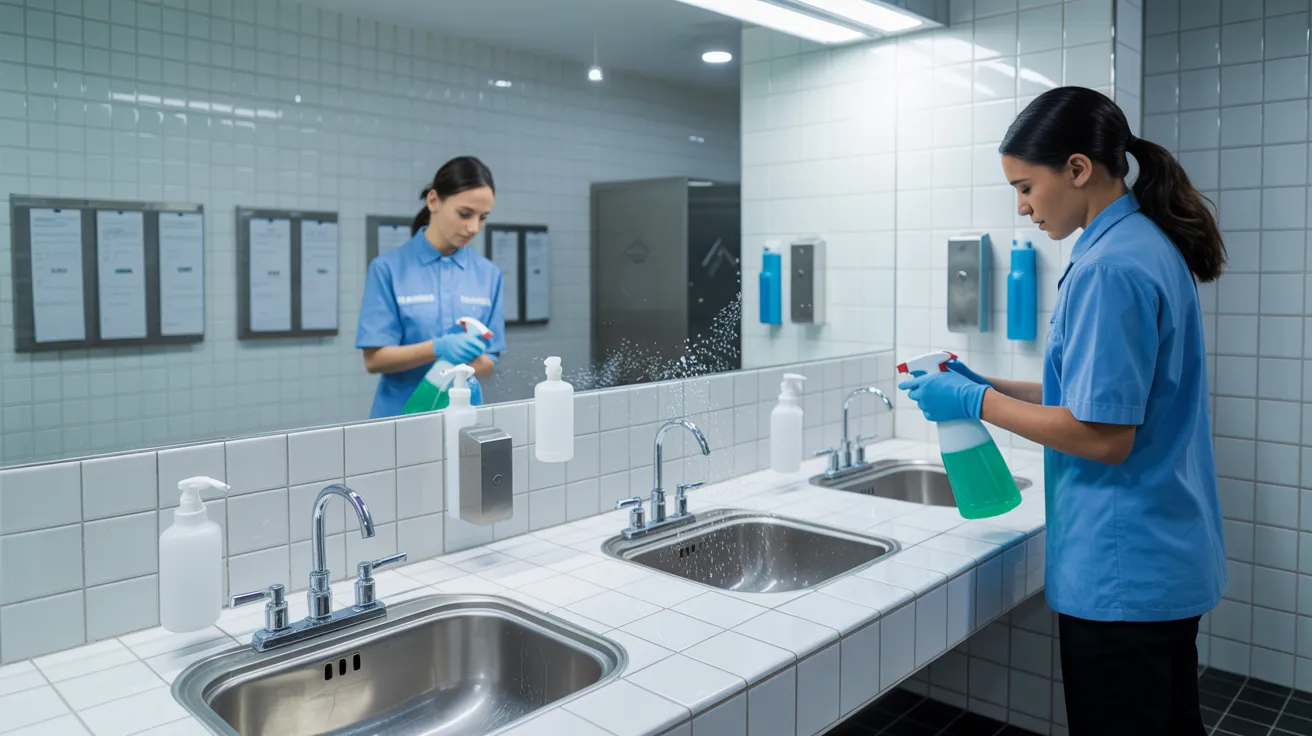
Brampton cleaning services zero in on kitchens, floors, and restrooms as each zone presents distinct sanitation, accident, and public health concerns. In industrial kitchens, you need grease removal from cooking stations, appliance surfaces, drain systems, preparation areas, and backsplashes to reduce contamination and pest pressure.
Professional floor upkeep with documentation is also included. is likewise provided as part of the service.
In restrooms, cleaners treat touchpoints, fixtures, partitions, dispensers, and waste containers then restock supplies and control odours. They also maintain restaurant cleaning supply rooms where product storage, sink cleanliness, and drain systems impact daily sanitation standards and worker protection.
Why Food Safety Cleaning Matters in Brampton
Brampton businesses need to implement proper sanitation practices for satisfying health code requirements and obtaining approval. You also reduce cross-contamination by cleaning and sanitizing food-contact surfaces, equipment, and high-touch areas correctly. Most importantly, you help protect public health by lowering the risk of foodborne illness in your facility.
Sanitary Standards Adherence
Brampton food businesses must comply with stringent health requirements, so cleaning procedures is essential to meeting health codes, ensuring the safety of customers, and eliminating penalties. You must maintain sanitary food-contact surfaces, written maintenance records, proper chemical use, and traceable training practices that correspond to municipal and provincial inspection expectations.
During regulatory assessment of your operation, auditors assess whether your cleaning procedures facilitates safe storage, appliance cleanliness, refuse management, and facility cleanliness. Strong cleaning records permit you to prove due diligence during inspection audits and indicate that your operations are consistent, replicable, and monitored.
Cross-Contamination Avoidance
Adhering to regulatory guidelines requires your skill in preventing cross-contamination throughout routine preparation and sanitation work. You need to separate raw ingredients from ready-to-eat foods, clean prep surfaces between tasks, and store cleaning supplies separately from food. Organized systems minimize contamination events and ensure consistent compliance during inspections.
You could implement allergen segregation to stop main allergens from reaching common areas, containers, or machinery. Use dedicated cutting boards, color-coded tools, and rigorous tool identification so team members avoid blending products throughout cooking or delivery. Mandate handwashing after handling raw meat, seafood, eggs, or allergen-containing products. Change wiping cloths regularly, and test disinfectant concentration using strips. When you train staff to follow these controls every shift, you develop a more sanitary, secure business that matches Brampton's safety requirements every day.
Community Health Safety
If food safety cleaning declines, you don't merely face potential inspection issues—you amplify the risk of foodborne illness harming customers, staff, and the broader Brampton area. You also undermine your responsibility in protecting public health, especially in high-traffic food premises where contamination can spread quickly through surfaces, equipment, and touchpoints.
You must implement cleaning procedures that eliminate contaminants, effectively sanitize, and ensure effectiveness. This entails adhering to contact periods, utilizing authorized sanitizers, recording schedules, and coaching staff to fulfill health-unit expectations. These actions support disease prevention by reducing microbes before contaminating food or hands. In Brampton, robust sanitation shields vulnerable populations, minimizes disease spread, and proves your diligence. When you maintain standards, you exceed requirements—you meaningfully lower danger and promote secure food service throughout the city.
How Can Cleaning Practices Ensure Food Safety Compliance?
Thorough cleaning protocols promote food safety compliance by lowering contamination exposure, managing pathogen expansion, and keeping your facility aligned with sanitation requirements under HACCP-based programs and public health regulations. You confirm that contact surfaces appear visibly clean and microbiologically controlled, enabling documented preventive controls and inspection readiness.
Cleaning efforts additionally fortify allergen mitigation by eliminating residues that can trigger undeclared allergen exposure.
What's the Best Time to Plan Commercial Cleaning?
Cleaning plans work best when you set them according to risk factors, production rates, and legal standards rather than depending on a fixed calendar alone.
facility closures, seasonal-related soil buildup, or pest-related pressure timeframes.
Selecting the Right Brampton Cleaning Experts: Key Considerations
Begin by evaluating providers based on sanitation compliance standards—not solely on price alone. You should confirm that each organization comprehends CFIA, public health, and HACCP-based requirements applicable to your facility. Request insurance certificates, WHMIS helpful resource compliance, staff training documentation, and oversight procedures. Assess whether technicians recognize cross-contamination hazards, chemical handling protocols, and verifiable sanitation records.
You must also evaluate business consistency and oversight. Seek references from food facilities in Brampton, then assess response speed, corrective-action procedures, and communication quality. Ensure the company supports supplier audits and can provide inspection-compliant records when authorities or third parties demand verification. Verify equipment is maintained, color-coded items are deployed correctly, and operational-specific risks are understood. A reputable service safeguards compliance, product safety, and your market standing.
Which components are part of a Food Safety Cleaning Plan?
Establish a documented program that establishes every sanitation duty, standard, and accountability before production begins. You should list cleaning frequencies, approved chemicals, dilution rates, contact times, tools, and verification methods for each sector, surface, and equipment. Add pre-operational inspections, corrective actions, and employee training requirements.
Your strategy should also address prevention of contamination, waste management, pest-control tactics, and scheduled records for facilities, drains, flooring, and food-preparation surfaces. Specify how you'll separate raw and ready-to-eat processes, facilitate ingredient tracking, and keep accurate allergen labeling through validated cleaning between product changes. You should assign accountability, keep signed records, and assess results against regulatory standards, HACCP controls, and customer requirements. When gaps appear, modify procedures immediately and retrain staff.
Popular Inquired Inquiries
Are sanitation providers offered for nighttime operations in Brampton properties?
Yes, you can arrange sanitation coverage to accommodate overnight shifts in Brampton facilities. You'll coordinate overnight sanitation around operational schedules, access controls, and personnel needs. Providers typically map overnight procedures to reduce disruption, ensure adherence, and document completed tasks. You should confirm response times, oversight, access protocols, and disposal methods before service begins.
Are emergency spill response solutions available from Brampton cleaning experts?
Yes, you can locate Brampton cleaning professionals providing spill response options. They handle hazardous incidents, evaluate risks, contain affected zones, and begin swift decontamination to minimize exposure and prevent business disruption. You should confirm timeframes, certifications, safety protocols, and disposal methods. If your facility must adhere to regulations, pick a provider that documents events, adheres to standards, and supports verification.
Are eco-friendly disinfectants secure for food preparation areas?
Yes, natural disinfectants can be appropriate for food-handling equipment if you select items marked food-safe and complying with regulations. You should confirm contact times, mixing proportions, and rinsing needs before implementation. Many natural-based solutions lower chemical hazards, but you still need demonstration of efficacy against target microorganisms. To preserve residue-free areas, you should follow manufacturer directions precisely and verify the sanitizer adheres to relevant food safety standards.
Will sanitation programs adjust for seasonal variations?
Absolutely, sanitation programs are customizable for seasonal variations. Adapt timing, staff levels, cleaning agents, and verification steps to match production rhythms while preserving regulatory compliance. Minimize equipment downtime through scheduling disinfection during changeovers, peak volumes, and usage patterns. Further modify standard operating procedures, training, and environmental testing to capture transient threats, additional allergens, or increased soiling. Frequent reviews ensure the plan current.
Do professional cleaners coach your team in sanitation best practices?
Certainly, professional cleaning experts coach your staff on hygiene protocols. You secure employee development on correct chemical practices, processing times, cross-contamination prevention, equipment disassembly, and documentation procedures. They generally coordinate coaching with HACCP, GMP, and CFIA or local public health requirements. Many execute health assessments to check standards, uncover shortcomings, and reinforce corrective actions. This helps you copyright standard processes, pass inspections, and reduce food safety risks daily.
Closing Remarks
Partnering with Brampton commercial cleaning and food safety professionals goes beyond tidying—it guarantees your operation meets inspection standards and your standards remain compliant. From processing facilities to kitchens, each cleaned area and organized section reduces health hazards and prevents major expenses. By scheduling maintenance at suitable frequencies and implementing a thorough cleaning program, you protect your workforce, clients, and your image. In a tightly controlled market, sanitary conditions are non-negotiable—they're critical to business success.